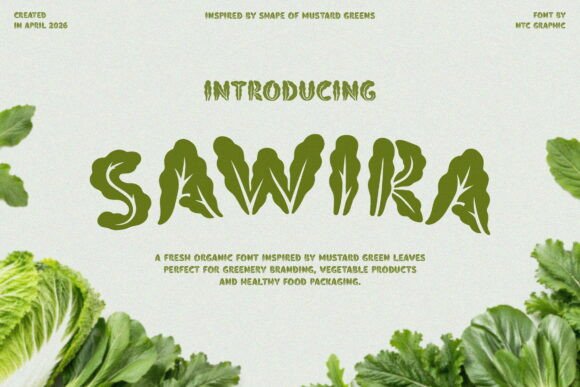
Sawira Font: Organic Branding for Small Business
I was sitting at my kitchen table last Tuesday, staring at a stack of blank kraft paper tags for a client’s new line of herbal teas. The branding needed to feel earthy, grounded, and unmistakably handmade, but every display font I tried felt either too rigid or too messy. That is when I pulled up Sawira. As a creative consultant who helps small businesses refine their visual identity, I am always on the hunt for typefaces that do more than just spell out words—they need to tell a story. Sawira is a unique organic display font inspired by the natural shapes of mustard green leaves, and in that moment, it was exactly the missing piece for our packaging design.
Using Sawira for Natural Product Packaging and Labels
When you are selling physical goods, whether it is artisanal soap, small-batch honey, or hand-poured candles, your packaging is your silent salesperson. Sawira brings a fresh, natural, and handcrafted feel to these surfaces that standard typography simply cannot match. In our tea project, we used Sawira for the primary flavor names on the front of the box. Because the letterforms are bold, irregular, and leafy, they mimic the organic nature of the product inside. This creates an immediate psychological connection for the customer; the font looks like it grew there, rather than being printed on.
For business owners, this distinction is crucial. Using a font like Sawira signals that your brand values authenticity and nature. It works exceptionally well for labels where you want to highlight ingredients or origin stories. However, readability is key. Since Sawira is a display typeface, it shines best in larger sizes. I recommend using it for the main product title or the brand logo on the label, while pairing it with a clean, simple sans serif font for the smaller details like net weight, ingredients, and usage instructions. This contrast ensures your package looks professional and easy to read, even on a crowded shelf.
Elevating Café Menus and Boutique Signage with Organic Typography
Beyond packaging, Sawira transforms static information into engaging visual experiences, particularly in hospitality and retail spaces. Imagine a local café refreshing its seasonal menu board. Instead of standard block letters, using Sawira for the headers of sections like "Spring Blends" or "House Specials" adds a layer of warmth and invitation. The irregular strokes of the font break the monotony of digital screens and printed papers, making the menu feel curated and thoughtful.
This application extends to boutique signage and window displays as well. If you own a clothing store or a plant shop, your window graphics need to stop passersby in their tracks. Sawira’s leafy aesthetic aligns perfectly with brands that prioritize sustainability and organic materials. When used in large format printing for window decals or hanging signs, the bold character of the font remains legible from a distance while retaining its artistic charm. It turns a simple sale announcement into a piece of editorial design that reflects the soul of your business. For these uses, ensure you have the high-resolution files typically included in premium font packages to avoid pixelation on large prints.
Creating Consistent Social Media Graphics and Digital Ads
In the digital realm, consistency is the cornerstone of brand recognition. Sawira is not just for print; it is a powerful tool for building a cohesive presence across Instagram, Pinterest, and Facebook. Many small business owners struggle to make their social media posts stand out in a saturated feed. By incorporating Sawira into your template designs for quotes, product launches, or sale announcements, you create a recognizable visual signature. The fresh, natural vibe of the font helps your content feel less like an ad and more like a lifestyle inspiration.
When designing for social media, remember that Sawira is a display font, meaning it is designed for impact, not long paragraphs. Use it for headlines on your carousel covers or as a decorative accent in your Stories. For example, a skincare brand might use Sawira to write "Glow Naturally" over an image of their serum, while keeping the caption text in a minimalistic font. This hierarchy guides the viewer’s eye and makes the graphic aesthetically pleasing. Furthermore, because the font has such a distinct personality, it reduces the need for excessive graphical elements; the typography itself becomes the main design asset, saving you time and keeping your feed clean and uncluttered.
Pairing Sawira with Complementary Fonts for Brand Identity
One of the most common questions I get from clients is how to mix fonts without creating visual chaos. Sawira, with its bold and irregular structure, pairs beautifully with understated counterparts. To maintain a modern and professional look, I often pair it with a geometric sans serif font. The clean lines of the sans serif balance the organic curves of Sawira, creating a harmonious contrast that is easy on the eyes. This combination works well for business cards, where the name of the business might be in Sawira and the contact details in a simple, readable typeface.
For a more romantic or vintage feel, such as for wedding invitations or boutique thank-you cards, you might experiment with pairing Sawira with a delicate script font. However, use caution here; since both fonts have decorative qualities, ensure they do not compete for attention. The key is to let Sawira take the lead as the primary voice of the brand, while the secondary font supports it quietly. Before finalizing your brand identity, test these pairings on actual mockups—print a sample label or create a digital ad preview. Seeing how the fonts interact in context will help you decide if the balance feels right for your specific audience.
Licensing and Technical Considerations for Commercial Use
Before you download and start designing, it is essential to understand the technical and legal aspects of using Sawira. As a commercial font, it comes with specific licensing terms that dictate how you can use it in your business projects. Whether you are creating digital downloads, physical merchandise, or client work, always check the license agreement included with the font files. Most premium fonts offer different licenses for personal use, commercial use, and enterprise-level applications. Ensuring you have the correct license protects your business from legal issues and supports the type designers who create these valuable assets.
Technically, Sawira is provided in standard formats like OTF or TTF, which are compatible with most design software including Adobe Illustrator, Photoshop, and Canva. When working with the font, explore any included alternates or ligatures. These features allow you to customize the look of certain letter combinations, adding an extra layer of uniqueness to your logo or headline designs. Additionally, check for multilingual support if your business serves a diverse customer base. By taking these steps, you ensure that your investment in Sawira yields a versatile and legally sound foundation for your brand’s visual identity.